
Sourdough Sandwich Bread
Learn to bake soft, fluffy sourdough sandwich bread with an active starter, a tender crumb, and a lightly tangy flavor.
- Author
- By Baking Hot Recipes
- Published
- Published December 27, 2025
- Updated
- Updated August 3, 2026
Quick facts
- Prep time
- 20 min
- Cook time
- 40 min
- Rise & proof
- 8 hr
- Total elapsed time
- 9 hr
- Yield
- 1 loaf
- Servings
- 12
About this recipe
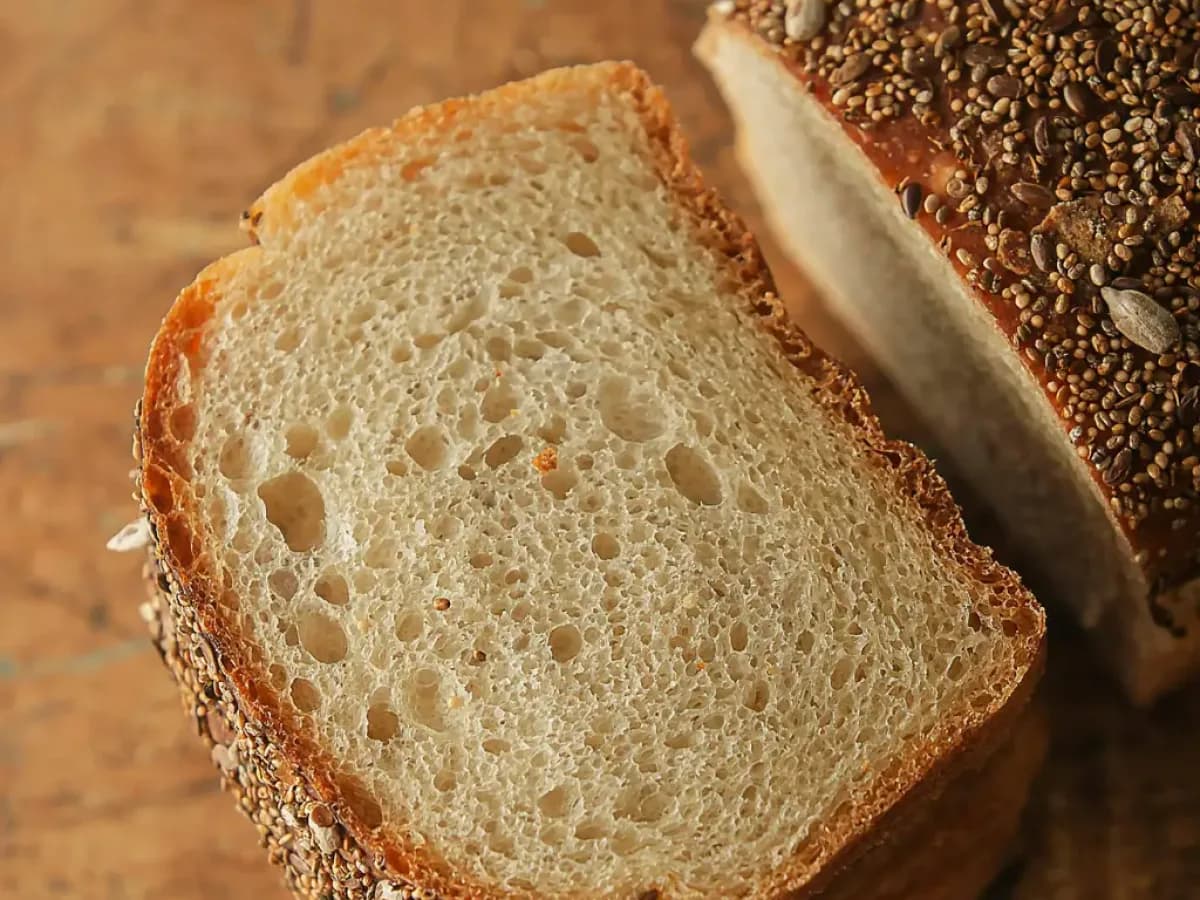
Imagine slicing into soft, fluffy sourdough sandwich bread baked at home. This loaf combines a tender crumb with the distinctive flavor of natural fermentation and works well for sandwiches, toast, grilled cheese, and French toast.
Ingredients
Main dough
- 120 g active sourdough starter, bubbly and ready to bake
- 500 g high-protein unbleached bread flour
- 300 g lukewarm filtered water
- 10 g fine salt
- 30 g granulated sugar
- 30 g neutral oil, plus more for greasing the bowl and loaf pan
Instructions
Prepare and bake the loaf
Step 1 - 1 hr
Mix the dough
Combine the active sourdough starter, flour, water, salt and the remaining dough ingredients in a large bowl. Mix until a shaggy dough forms, then allow it to rest for 1 hour so the flour can absorb the water.
Step 2
Knead the dough
Knead until the dough is smooth and elastic. This takes approximately 10 minutes with a stand mixer or approximately 20 minutes by hand.
Step 3
Complete the first rise
Place the dough in a lightly oiled bowl, cover it and leave it in a warm, draft-free place until it has doubled in size. The first rise generally takes 4 to 6 hours, depending on room temperature and starter activity.
Step 4
Shape the loaf
Gently flatten the risen dough and shape it into a loaf. Transfer it to a greased loaf pan and cover it for the final proof.
Step 5
Proof the shaped loaf
Allow the shaped loaf to proof until the dough has doubled and domes over the edges of the pan. At room temperature this generally takes 2 to 4 hours. Alternatively, refrigerate it for an overnight proof of approximately 8 to 12 hours.
Step 6 - 40 min
Bake the bread
Preheat the oven to 375F. Bake the loaf for approximately 40 minutes, until the crust is golden brown and the center reaches approximately 198F. The loaf should sound hollow when tapped.
Recipe notes
The Magic of Sourdough Sandwich Bread
Homemade sourdough sandwich bread is a treat. It has a flavor and texture that store-bought can't match. Slicing into a homemade loaf is special. It's soft, fluffy, and has that tangy taste we all love.
What Makes Sourdough Special
Sourdough bread is special because it's made with a sourdough starter, not commercial yeast. This natural process gives it a unique flavor and makes it easier to digest. The tangy taste comes from lactic acid, which also helps preserve the bread. Using a sourdough starter means you can bake whenever you want. You can adjust the proofing time to fit your schedule. This makes it perfect for both same-day and overnight baking.
Benefits of Homemade Sourdough
Homemade sourdough sandwich bread has many benefits. You control what goes into it, avoiding preservatives and additives. It's also packed with nutrients and has a lower glycemic index than regular bread. The source highlights control over ingredients, nutritional value and customizable flavor as key benefits of baking sourdough at home. By baking your own sourdough, you can try out different sourdough sandwich ideas. It's rewarding to eat something you made yourself.
Ingredient note
Essential Ingredients
Making the perfect sourdough sandwich bread begins with picking the right ingredients. The quality of your bread depends on the ingredients you choose. Ingredients like salt, sugar, and water are also crucial. Salt boosts flavor, and sugar feeds your starter. The quality of water affects the dough's hydration and texture. Using filtered water can lead to better results.
Ingredient note
Flour Selection and Quality
The flour you pick is key for your sourdough sandwich bread. High-protein flours are best because they help with structure and texture. Choose unbleached, unbromated flour for the best taste and nutrition.
Ingredient note
The Importance of Active Sourdough Starter
An active sourdough starter is the bread's heart, giving it the unique leavening. Make sure your starter is lively and bubbly before mixing it with the dough. A strong starter will make your bread rise well and taste tangy.
Equipment You'll Need
To make great sourdough sandwich bread, you need the right tools. The right equipment makes the process easier and helps you get consistent results. For baking sourdough sandwich bread, the source lists 2, 9x5 inch bread loaf pans, a kitchen digital scale, a probe thermometer, a dough whisk and a dough scraper. Optional helpful tools include a stand mixer with a dough hook attachment and a proofing basket or bowl with a cloth cover.
Tip
Preparing Your Sourdough Starter
Before you start making your sourdough sandwich bread, you need to prepare your starter. A healthy, active starter is key to a tasty homemade bread. To get your starter ready for baking, feed it 4-8 hours before. This lets it become active and bubbly. It shows it is ready to make your dough rise. A ready starter is bubbly, frothy, and smells slightly sour. This means it's active and ready for your bread. You can also do a float test: if it floats in water, it's ready.
Tip
Same-Day Sourdough Bread Method
Making sourdough bread in just one day is easy with a few tricks. You can speed up the fermentation and use quick methods to make fresh bread in hours. To make sourdough bread quickly, speed up the fermentation. Use a warmer place for the dough to rise. Aim for 80F to 90F (27C to 32C) for faster growth. The source suggests using an oven with the light on, placing the dough near a heater while monitoring temperature, or using a proofing box if available. While making the dough rise faster, keep the flavor and quality in check by using an active starter, mixing and kneading efficiently, and monitoring the dough's rise.
Tip
The Art of Proofing Your Sourdough Loaf
Getting the perfect proof is an art that needs patience and knowing your sourdough's needs. Proofing is key in bread making. It lets the dough rise and develop sourdough's unique flavor and texture. To check if your sourdough has proofed right, look for these signs: the dough should have doubled in size. It should also dome over the bread pan's edges. This can take 2 to 4 hours, depending on the temperature and your starter's activity. You can proof your sourdough overnight in the fridge or at room temperature. Overnight proofing slows down fermentation and can lead to more complex flavors, while room temperature proofing is quicker.
Tip
Baking Techniques
To make perfect sourdough sandwich bread, you need to master baking techniques. Baking in a bread pan requires the right oven temperature, timing, and methods. For sourdough, set the oven to 375F. The baking time varies based on loaf size and oven type, but usually it takes about 40 minutes for a golden crust and an internal temperature of 198F. To get a perfect crust, make sure your oven is at the right temperature. Use steam during the first part of baking with a pan of water or steam injector. Check the internal temperature and tap the bottom of the loaf. If it sounds hollow, it is done. The crust should also be golden brown, and the bread should not feel soft or squishy.
Warning
Troubleshooting Common Sourdough Problems
Troubleshooting is key to mastering sourdough baking. Even experienced bakers face problems. Knowing how to fix common issues can greatly improve your baking. A dense or flat loaf can be a letdown. It's usually because of underproofing or overmixing. Make sure your dough has enough time to rise and avoid mixing and kneading too much. A gummy interior often comes from underbaking or wrong oven temperature. Ensure you bake your bread long enough and at the correct temperature. Use a digital thermometer to check your oven's accuracy. Crust problems, like a too-hard or too-soft crust, can be fixed by adjusting baking time and temperature. Try baking in a steamy oven at first to improve the crust. If your sourdough lacks flavor, think about changing your sourdough starter's feeding schedule or flour type. Adding nuts, herbs, or spices can also boost the flavor.
Serving suggestion
Serving Suggestions
Now that you've baked your sourdough sandwich bread, it's time to enjoy it. This bread is great for many things, like sandwiches, French toast, grilled cheese, or bread pudding. You can slice it thin for sandwiches or toast it for breakfast. Its tangy flavor and soft texture are perfect for many dishes. Try different fillings and toppings to make your sourdough even better. Whether it's a simple snack or a fancy meal, your sourdough will impress.
Storage
Storage
Store it in an airtight container at room temperature or freeze it. This keeps it fresh.
Frequently Asked Questions
What is sourdough sandwich bread?
Sourdough sandwich bread is made with a sourdough starter instead of commercial yeast. It is soft, fluffy, and perfect for sandwiches.
Can I make sourdough sandwich bread on the same day?
Yes, you can make it on the same day by speeding up the fermentation. Just watch the dough to avoid over-proofing.
What type of flour is best?
Use high-quality all-purpose or bread flour. It has good protein for structure and texture.
How do I know if my sourdough starter is ready?
It's ready when it's bubbly, frothy, and smells tangy. This means it's active and healthy.
Can I use a bread pan?
Yes, a bread pan is great for baking. It helps make a uniform shape and crust.
Why did my loaf turn out dense or flat?
It might be due to overmixing, under-proofing, or an inactive starter. Check your recipe and technique.
How can I achieve a soft crust?
Brush it with melted butter or oil after baking. Or use steam during baking for a tender crust.
Can I proof it overnight?
Yes, proof it in the fridge overnight. This develops flavor and texture.
What are some serving ideas?
Use it for sandwiches, toast, or even desserts like bread pudding. Get creative and enjoy your homemade bread!
How should I store the bread?
Store it in an airtight container at room temperature or freeze it. This keeps it fresh.